Sometimes, people decide about your studio before they ever walk through the door. A potential student searches for yoga classes nearby. Your studio appears in the results. But before they visit your website or check your schedule, they look at one thing first: the reviews.
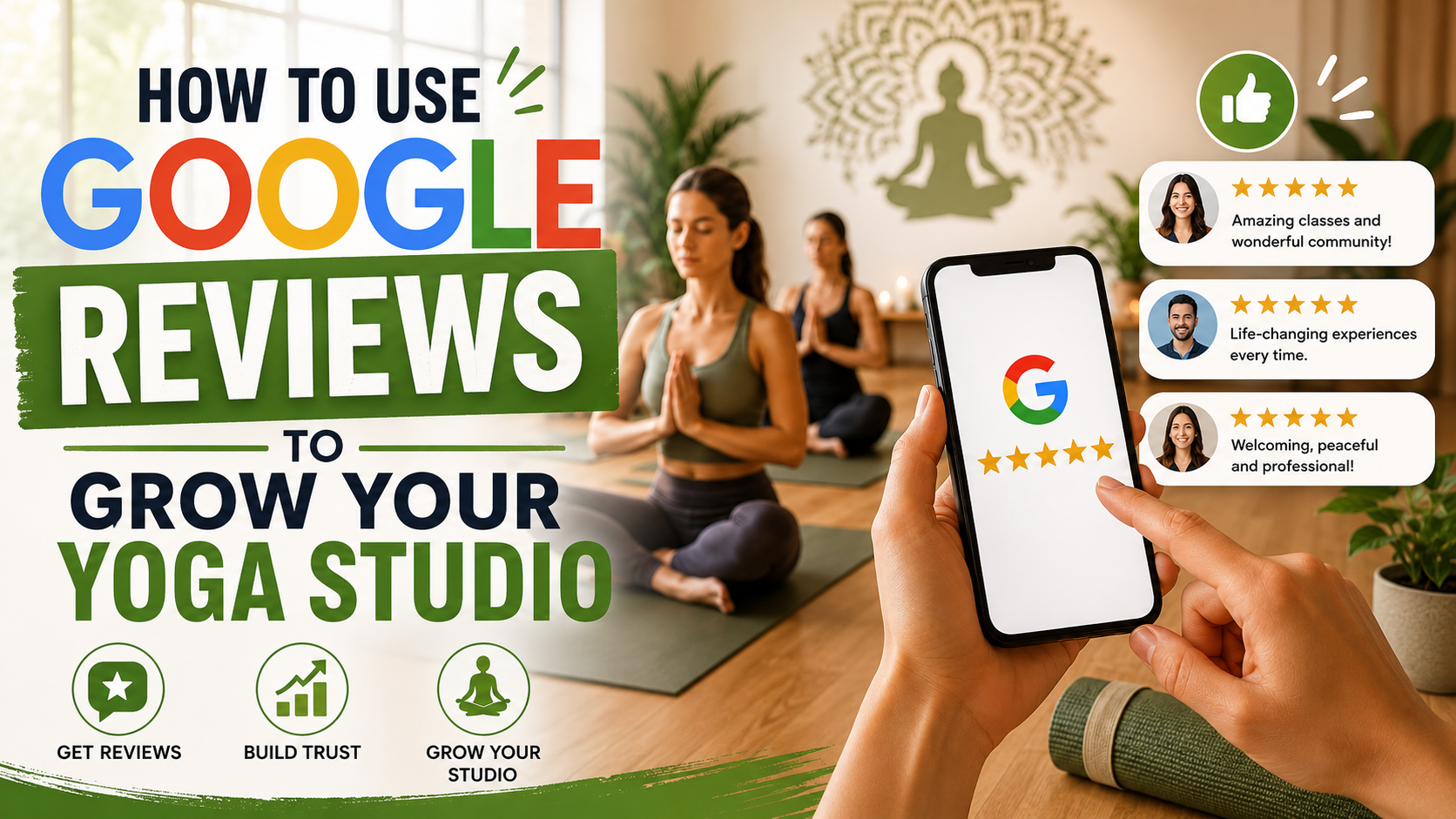
Sometimes, people decide about your studio before they ever walk through the door. A potential student searches for yoga classes nearby. Your studio appears in the results.
But before they visit your website or check your schedule, they look at one thing first: the reviews.
They scroll through ratings, read experiences, and quietly decide whether your studio feels trustworthy. In many cases, that decision happens within seconds.
That is why Google Reviews have become one of the most influential growth tools for modern studios. A strong review presence not only builds trust but also improves visibility, customer confidence, and conversion rates.
When supported with systems like studio management software, reviews become more than feedback—they become a long-term marketing asset.
This guide explains how yoga studios can use Google Reviews strategically to grow their business in a genuine and sustainable way.
For yoga studios, trust is everything. People are not just choosing a workout space; they are choosing an environment where they feel comfortable, supported, and welcomed. Google Reviews help communicate that experience publicly.
When someone sees a yoga studio with frequent positive reviews, detailed feedback, and active engagement, it instantly creates reassurance. On the other hand, an inactive or poorly reviewed profile often creates hesitation, even if the studio itself is excellent.
Beyond customer trust, reviews also influence local search rankings. Google tends to prioritize businesses that show consistent customer interaction and positive engagement.

Studios with active review profiles generally experience stronger local visibility because Google interprets regular reviews as a sign of business credibility and relevance.
A good review does more than improve ratings. It tells a story.
A new visitor may connect deeply with reviews mentioning:
This emotional reassurance often influences bookings more effectively than advertisements.
One of the biggest mistakes yoga studios make is treating reviews as an occasional task instead of a continuous process. Successful studios create habits around review collection. They understand that consistency builds momentum over time.
Rather than asking for reviews only during promotions or peak seasons, they integrate requests naturally into the customer experience. The most effective studios usually ask for reviews after moments when members already feel positive emotions—after a relaxing session, a successful workshop, or a milestone in their yoga journey.
Using studio management software makes this process much easier because member interactions, attendance patterns, and follow-ups can all be organized systematically.
Many businesses struggle with reviews simply because they ask in the wrong way. Generic requests often feel impersonal. People respond better when the request feels genuine and conversational.
Instead of saying:
“Please leave us a review.” Try something more thoughtful:
“We’d love to hear how your experience at the studio has been so far.”
That small change makes the interaction feel more human. Timing also matters. The best moment to ask is usually right after a positive experience, when the emotional connection is strongest.

Many successful wellness studio owners have shared that their highest-quality reviews came naturally after they focused on creating meaningful member experiences instead of aggressively asking for feedback.
In many cases, students voluntarily mentioned:
This type of authentic storytelling builds stronger trust than promotional messaging ever could.
As your studio grows, manually requesting reviews becomes difficult to maintain consistently. This is where automation becomes valuable.
With yoga studio software, studios can automatically send review reminders after classes, workshops, or package completions. This keeps the process organized without overwhelming staff members.
Automation also helps ensure that no customer interaction is forgotten. Instead of depending entirely on memory or manual follow-ups, your system can maintain consistency in communication while you focus on delivering better experiences inside the studio.
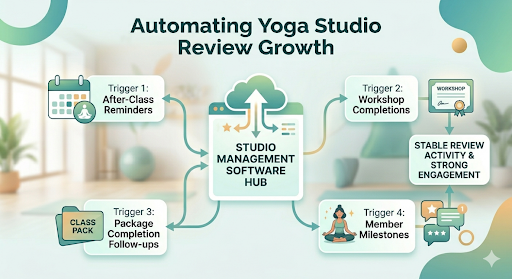
Businesses using automated customer follow-up systems often maintain more stable review activity and stronger engagement over time.
Google Reviews affect multiple areas of your business simultaneously.
They improve:
But perhaps their biggest impact is psychological. When people compare studios online, they naturally gravitate toward businesses that appear socially validated. A studio with hundreds of authentic reviews immediately feels safer and more established.
Google’s local search algorithm heavily values relevance and engagement. Studios with recent reviews, consistent ratings and active customer interaction are often more likely to appear in local search results.
This creates a compounding effect as more visibility leads to more inquiries, which can eventually lead to more reviews again.
The relationship between reviews and growth often works like this:
Review Growth Business Outcome
More positive reviews Higher customer trust
Higher trust More inquiries
More inquiries Increased bookings
Better customer experience More reviews
This cycle becomes even stronger when supported by reliable studio management software that keeps operations smooth and customer communication consistent.
Instructors and front-desk staff often shape the customer experience directly. When customers mention them positively in reviews, it highlights the emotional connection they created. Recognizing these contributions internally can significantly improve team motivation.
Some studios offer:
This doesn’t just encourage better service—it also creates a stronger review-focused culture within the studio.
Insight: Businesses that actively celebrate positive customer feedback internally often see improved team morale and stronger customer relationships.
Growing reviews doesn’t require aggressive tactics. Most successful studios focus on making the process natural and accessible. Simple strategies often work best.
Adding QR codes at reception desks, including review requests in follow-up emails, or encouraging members to share personal experiences can all improve review participation without feeling forced.
Many yoga studios also see strong engagement after:
These moments create emotional experiences that people naturally want to talk about.
Challenge Solution
Customers forget to leave reviews Use automated reminders
Inconsistent review growth Create a regular process
Negative reviews Respond calmly and professionally
Low staff engagement Encourage team recognition
Google Reviews are no longer optional for yoga studios. They influence how people discover your business, how much they trust your brand, and whether they decide to book a class.
But the real value of reviews goes deeper than visibility. Reviews reflect experiences. They capture emotions. They tell future customers what your studio truly feels like. The studios that grow consistently are usually not the ones shouting the loudest online. They are the ones building genuine trust over time.
When you combine:
you create a stronger foundation for sustainable growth. And often, the journey of your next loyal customer begins with a single review.
Q1: Why are Google Reviews important for yoga studios?
A1: Google Reviews help yoga studios build trust, improve local search visibility, and attract new students. Positive reviews also influence customer decisions by showcasing real experiences from existing members.
Q2: How can Google Reviews improve yoga studio marketing?
A2: Google Reviews strengthen yoga studio marketing by increasing credibility and helping your studio appear more prominently in local Google search results. They also act as social proof for potential customers.
Q3: What is the best way to ask yoga customers/ students for reviews?
A3: The best approach is to ask naturally after a positive class experience. Personalized requests usually perform better than generic review messages.
Q4: Can yoga studio management software help collect reviews?
A4: Yes, yoga studio management software can automate review requests through emails or SMS reminders, making the review collection process more consistent and efficient.
Q5: How many Google Reviews does a yoga studio need?
A5: There is no fixed number, but consistent and recent reviews matter more than quantity alone. Studios with active review activity often appear more trustworthy to new customers.
Q6: Do negative reviews hurt a yoga studio business?
A6: Negative reviews can impact perception if ignored. However, responding professionally and resolving concerns can actually strengthen customer trust and show accountability.
Q7: How often should a yoga studio request review?
A7: Studios should request reviews regularly after positive interactions such as workshops, milestone classes, or successful customer experiences.
Q8: Can Google Reviews increase yoga class bookings?
A8: Yes, authentic reviews influence customer confidence and often increase inquiries and bookings by helping people feel more comfortable choosing your studio.
Q9: How do reviews affect local SEO for yoga studios?
A9: Google uses reviews as a local ranking factor. Frequent positive reviews can improve your studio’s visibility in local search and Google Maps results.
Q10: How can yoga studios encourage more Google reviews naturally?
A10: Yoga studios can encourage more Google reviews by making the process simple and convenient for members. Adding QR codes at reception desks, sending review requests in follow-up emails, and inviting clients to share their personal experiences are effective ways to increase review participation without using aggressive tactics.