The best marketing ideas for a new barre studio combine a manageable budget with local visibility, community partnerships, and a clear path from a first class to a return visit. You don’t need to invest in every channel at once. Start with the activities that help nearby clients discover and try you...

The best marketing ideas for a new barre studio combine a manageable budget with local visibility, community partnerships, and a clear path from a first class to a return visit. You don’t need to invest in every channel at once. Start with the activities that help nearby clients discover and try your studio.
Opening a studio takes significant investment, so marketing should be practical and trackable. This guide covers budgeting, building visibility before opening, partnering with local businesses, and deciding when paid advertising makes sense. You’ll also learn how to shape an introductory offer and follow up after a first class, so your launch plan can keep working beyond opening week.
• Build local visibility with a clear, mobile-friendly booking path and an up-to-date Google Business Profile.
• Use pop-up classes and thoughtful partnerships to introduce your studio to people already connected to the local community.
• Make referrals easier to measure by recording how new students heard about your studio and rewarding successful introductions.
• Prioritize relationship-building early; use paid ads to expand reach once your offer and booking process are working smoothly.
• Give introductory students a welcoming first class and personal follow-up that makes their next visit easy to plan.
Treat these figures as planning guideposts, not a reason to spend across every channel at once. The strongest marketing ideas for a new barre studio connect local discovery with an easy first booking. Start with a focused mix, then compare campaign costs with bookings and return visits.
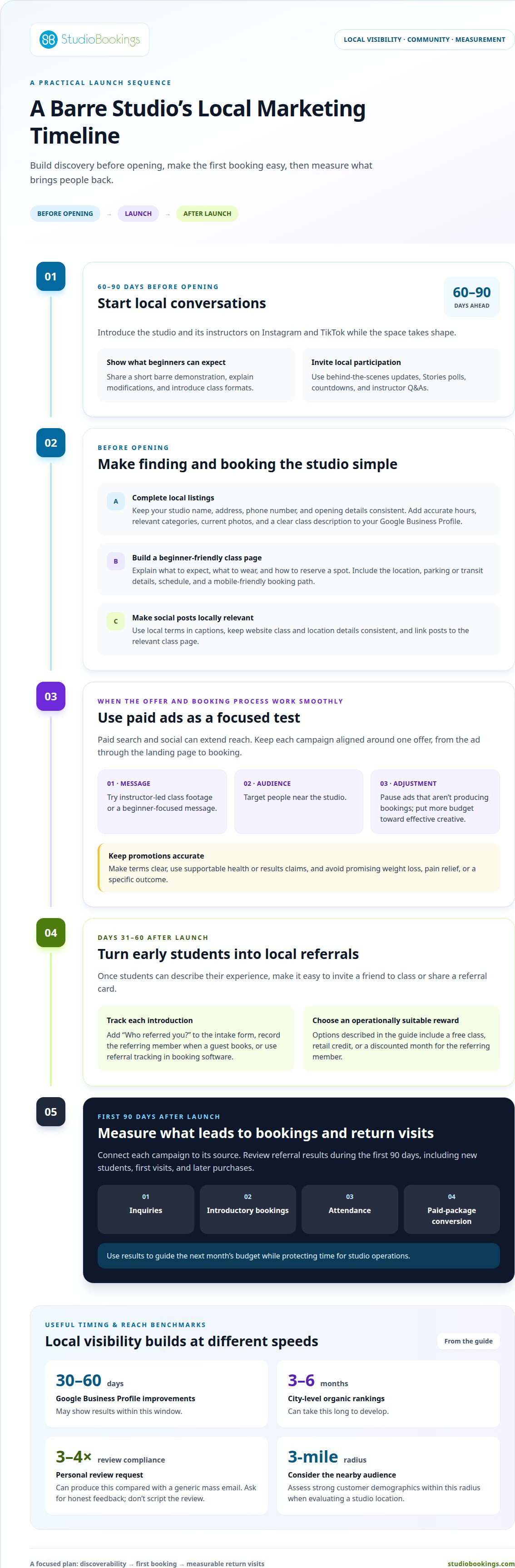
Begin 60 to 90 days before opening. Use Instagram and TikTok to introduce instructors, show the studio taking shape, and explain what beginners can expect. For example, post a short barre demonstration with a simple caption about modifications, then share a behind-the-scenes update on equipment setup. Add Instagram Stories polls, countdowns, and instructor Q&As to invite local followers into the launch.
Which social media strategies work best? Share useful, beginner-friendly content consistently: demonstrate a basic movement, explain what to bring, or introduce a class format. Add behind-the-scenes moments and a direct booking link. Use local terms in captions and keep your website’s class and location details consistent, so social posts support local discovery and give prospective students a clear next step.
Build engagement beyond regular classes with a six-week fitness challenge, a themed series, or a members-only social event. A challenge gives participants a shared goal; a series could focus on posture, balance, or beginner technique. Promote it through social media and email, with a clear next step such as booking an introductory class. Track attendance and subsequent bookings to learn which format leads to return visits.
Paid search and social advertising can extend your reach, but start with a focused campaign. Keep the ad, landing page, and booking process aligned around one offer. For social ads, use instructor-led class footage or a beginner-focused message, and target people near the studio. Pause ads that aren’t producing bookings and put more of the budget toward effective creative.
What advertising rules apply to fitness studios, promotions, and health claims in the United States? Make promotional terms clear and descriptions accurate. Use health or results claims only when they’re supportable, and avoid promising weight loss, pain relief, or a specific outcome from attending barre classes.
Which metrics should you track? Connect each campaign to its source, then monitor inquiries, introductory bookings, attendance, and conversion to paid packages. Treat marketing ideas for a new barre studio as experiments: use these measures to guide next month’s budget while protecting time for studio operations.
Make it easy for nearby beginners to find your studio and book. Before opening, optimize your Google Business Profile with accurate hours, relevant categories, current photos, and a clear description of your barre classes. Use the same studio name, address, phone number, and opening details across local listings. Consistency helps prospective students recognize your business and avoid confusion when comparing search results.
Your website should answer a beginner’s first questions at a glance. Create a dedicated page explaining what to expect at a first class, what to wear, and how to reserve a spot. Add your location, parking or transit details, class schedule, and a clear booking button that works well on mobile. For example, a page titled “Beginner Barre Classes in [City]” can connect local searches with a specific introductory option. Keep the page focused on one clear next step.
Local SEO takes steady work. Google Business Profile improvements may show results within 30 to 60 days, while city-level organic rankings can take 3 to 6 months. Add useful location details to your website, then keep class information current. Ask existing students for honest Google reviews after a positive visit. A personal request can produce 3 to 4 times the review compliance of a generic mass email. Make it easy to leave feedback, but don’t script the review.
Target the people most likely to attend regularly, not an imagined broad audience. Consider strong customer demographics within a 3-mile radius when assessing a studio location. Then use local knowledge to shape your message: mention nearby landmarks, commute routes, residential areas, or employers that students recognize. A short Instagram post about an upcoming beginner class can feel more relevant when it names a familiar neighborhood and links directly to the class page.
Build visibility through local relationships, too. Invite a nearby café, wellness space, or community group to collaborate on a pop-up class before opening. Share the event through both partners’ local channels and give attendees an easy way to book a return visit. A referral question on the booking form can show which partnerships bring in students. Track inquiries, first bookings, and repeat visits by source to see which listings, events, and messages merit continued attention.
Local referrals help a boutique fitness studio reach people through relationships, not just ads. Activate a referral program during days 31 through 60 after launch, once early students can describe their experience. Keep the invitation simple: ask members to bring a friend to a class or share a referral card. A clear offer gives both people a reason to act and helps attract students who already have a trusted connection to your studio.
Set up the program with one trackable referral method. Add “Who referred you?” to a new-student intake form, or record the referring member when a guest books. If your booking software supports referral tracking, use it to connect a referral with its reward. Review results during the first 90 days after launch, including new students, first visits, and later purchases. That gives you a practical view of whether the program contributes to revenue.
Choose rewards that suit your schedule and operations. A free class, retail credit, or discounted month can thank the referring member without making the process complicated. State exactly when the reward is earned, such as after the invited friend attends a first class. Use consistent terms in studio conversations, email, and social posts so members understand the offer and staff can manage it easily.
Recognition can encourage referrals without adding another discount. Thank members personally when a friend attends, or share a brief member story with permission. A branded water bottle or studio tote can be a visible thank-you, while a referral card gives members something simple to pass along. Keep merchandise optional and useful, rather than making a gift the main reason to recommend a class.
Local partners can extend the same referral loop. Exchange class vouchers with another fitness business, or offer a free or discounted session to members of a local sports team. Agree on how each partner will share the offer and how guests can identify its source. A partner-specific booking code or intake question, for example, helps distinguish referrals from general campaign traffic.
Make relationship-building ongoing, not a one-time launch task. Check in with partners after a shared event, thank them for introductions, and share which class formats suit their audience. Ask new students how they heard about the studio, then note whether referrals return for another visit. That feedback helps you invest time in the partnerships and rewards that fit your community, while keeping the program manageable as attendance grows.
Community-first marketing builds familiarity through local relationships, while paid advertising buys targeted visibility. For a boutique fitness studio with fewer than 500 members, community activity can support trust and referrals. Expect momentum to build over 3–6 months, and invest consistent time in conversations, events, and follow-up. This strategy grows more slowly than paid digital advertising, so use it to strengthen retention as well as attract new students.
Start with places your target audience already visits. A local magazine, community-center bulletin board, or neighborhood event can introduce your barre classes to nearby residents. Use one clear message, such as “Beginner barre classes near downtown,” with a simple booking action. Ask new students how they found the studio and record their answers. This makes it easier to see whether print or community outreach brings in prospective students who book.
Paid ads can provide immediate visibility, but conversion varies. Meta ads let you promote a specific class or introductory offer to women aged 25 to 45 who live within 10 miles of the studio. Use class footage and a direct booking page, then monitor which audience and message generate bookings. Google Ads can capture people searching for local barre classes. Keep the ad promise and landing page consistent, so visitors know what to do next.
Don’t treat paid traffic as a substitute for a working customer journey. Paid traffic sent to a homepage converts at 1% to 3% for barre studios. A dedicated page for one offer gives visitors a clearer route from ad to booking. Before increasing spend, check that class details, schedule, and booking steps are easy to understand. That’s especially useful for Pilates and barre studios introducing a new class format or location.
Community events can also give paid campaigns stronger local context. Sponsor a neighborhood wellness event, host a beginner workshop, or share a class demonstration with a nearby group. Existing barre students convert 4 to 6 times better than cold audiences for workshops, so invite current members to bring someone new. Follow up with attendees and offer a clear next class, rather than letting an event end without a return path.
Give community marketing and paid advertising distinct roles. Community marketing builds relationships and referrals; Meta and Google can extend your reach when your offer and booking process are ready. Compare cost, first bookings, attendance, and repeat visits by channel. If ads bring clicks but few bookings, revise the page or message before increasing spend. If a local event brings students back, keep the partnership active and build on what worked.
A first class should feel welcoming, clear, and easy to book. Explain the barre format before students arrive, including what to wear and how instructors offer beginner modifications. Plan a 60-minute first-class experience with a warm greeting, simple orientation, and time for questions afterward. A thoughtful welcome helps new visitors feel included without making the session feel like a sales pitch.
Give the introductory offer a defined next step. Keep the booking page clear about what the offer includes and how to reserve each class. If students prefer flexibility, a 5-, 10-, or 20-class pack can suit travel schedules or changing routines.
What marketing strategies help convert trial-class attendees into memberships? Follow up within 48 hours with a personal note that refers to their first class and suggests a suitable next session. Make the choice simple by explaining the difference between a membership and a class pack, then include the relevant booking option.
Build attendance habits during the first 30–60 days. A timely message after a visit can help a new student choose another class before the experience fades. Segment follow-up for first-time visitors, active members, and people who have gone quiet, then tailor the message to their booking history. A milestone note after a student’s first few visits can make the boutique studio experience feel personal.
Offer class formats for different groups, such as men, older adults, or teens. A beginner workshop, invite-a-friend class, or pop-up in a local community space can introduce barre without the commitment of a regular membership. Explain your class options at each event and give attendees a direct way to book their next visit.
Keep pricing choices easy to compare. Present the commitment and attendance options plainly, alongside flexible class passes. Test the main introductory offer consistently for at least 90 days before evaluating its results.
Connect booking, attendance, and follow-up so no first visit gets overlooked. Simplify class booking and membership management as your introductory program grows.
StudioBookings helps barre studios manage the operations behind a marketing plan. Its Pilates and Barre Studio Software brings class scheduling, memberships, payments, and staff management together in one dashboard. As introductory bookings, referrals, and repeat visits increase, keeping these tasks organized can reduce administrative work.
Use StudioBookings to organize class schedules and membership processes as your studio grows. The StudioBookings Mobile App is available to studio owners and members, making it easier to stay connected with studio activity. Explore StudioBookings’ software and start a free trial to streamline the operations behind your barre studio.
The strongest marketing ideas for a new barre studio evolve as you learn what your community responds to. Notice which class descriptions prompt questions, which partnerships bring people through the door, and what helps new students feel ready to return. Use those observations to shape your next decision instead of trying to be everywhere at once.
That growth also brings operational demands. StudioBookings offers Yoga Studio Software, Pilates and Barre Studio Software, and Fitness and HIIT Studio Software to help studios manage classes, memberships, payments, and staff from one dashboard. When you’re ready to connect the work of running your studio with the experience you’re building for members, talk with StudioBookings about your studio.
Your studio’s next chapter starts with one thoughtful step. Listen to your community, refine your approach, and build from there.
Treat those amounts as planning guideposts, not a reason to fund every channel. Assign spending to one goal at a time, such as local discovery or introductory bookings. Review inquiries and paid conversions monthly, and shift money if a channel draws attention but not bookings.
Local partnerships extend your reach through businesses and groups that already have community trust. A nearby wellness provider might share information about your classes with clients, while your studio introduces their services to members. Agree on one simple way to track referrals, such as a booking question or partner-specific code. After a shared event, thank the partner and discuss what drew interest before planning another collaboration.
Make the front desk a useful point of conversation, not just a check-in station. Train staff to welcome first-time visitors, explain where to leave belongings, and ask what brought them in. Keep a concise class schedule and introductory offer visible. After class, staff can ask what the visitor enjoyed and suggest a suitable next session. These interactions can uncover questions that online promotions miss.
TikTok can help a barre studio show its teaching style and personality through short, approachable clips. A consistent rhythm of 5 to 7 posts per week is recommended in the supplied marketing guidance. Rotate formats, such as an instructor answering a beginner question, a movement demonstration, or a quick studio tour. Watch for meaningful actions, including profile visits and class inquiries, rather than judging performance by views alone.
Build community by inviting genuine participation instead of posting only polished promotions. Ask instructors to answer common beginner questions, then respond thoughtfully to comments and messages. Share student stories only with permission, focusing on their experience rather than promising results. A recurring question prompt can reveal what local followers want to learn and give future posts a useful purpose.
Effective marketing connects discovery with a clear next step and a reason to return. A neighborhood post might introduce a class, while a follow-up email helps a first-time visitor choose another session. Segment messages for new leads, first-time attendees, and active members so each group receives relevant information. Track bookings and attendance by source: this is more useful than counting likes without connecting them to studio activity.
Try a beginner workshop, an instructor Q&A, or a short email welcome series that introduces your studio and explains how to book. A five-email series spread over 14 days can guide new subscribers through class expectations, instructor introductions, and booking options. Keep every message focused on one useful action. Review replies and bookings to learn which topics help prospective students take their next step.
A referral program works best when members can explain it easily and staff can record results consistently. Tell students how a friend can book, what happens after attending, and how the referring member is recognized. Track completed visits, not just cards handed out or codes shared. If referrals slow, ask members what would make inviting someone feel natural, then adjust the process without making recommendations feel pressured.