
A successful Pilates Workshop feels like more than a longer class. A focused theme gives people a clear reason to register, and a well-planned format keeps them engaged from arrival to follow-up. But choosing a topic is only the start. Promotion, bookings, payments, and staff coordination can quickl...
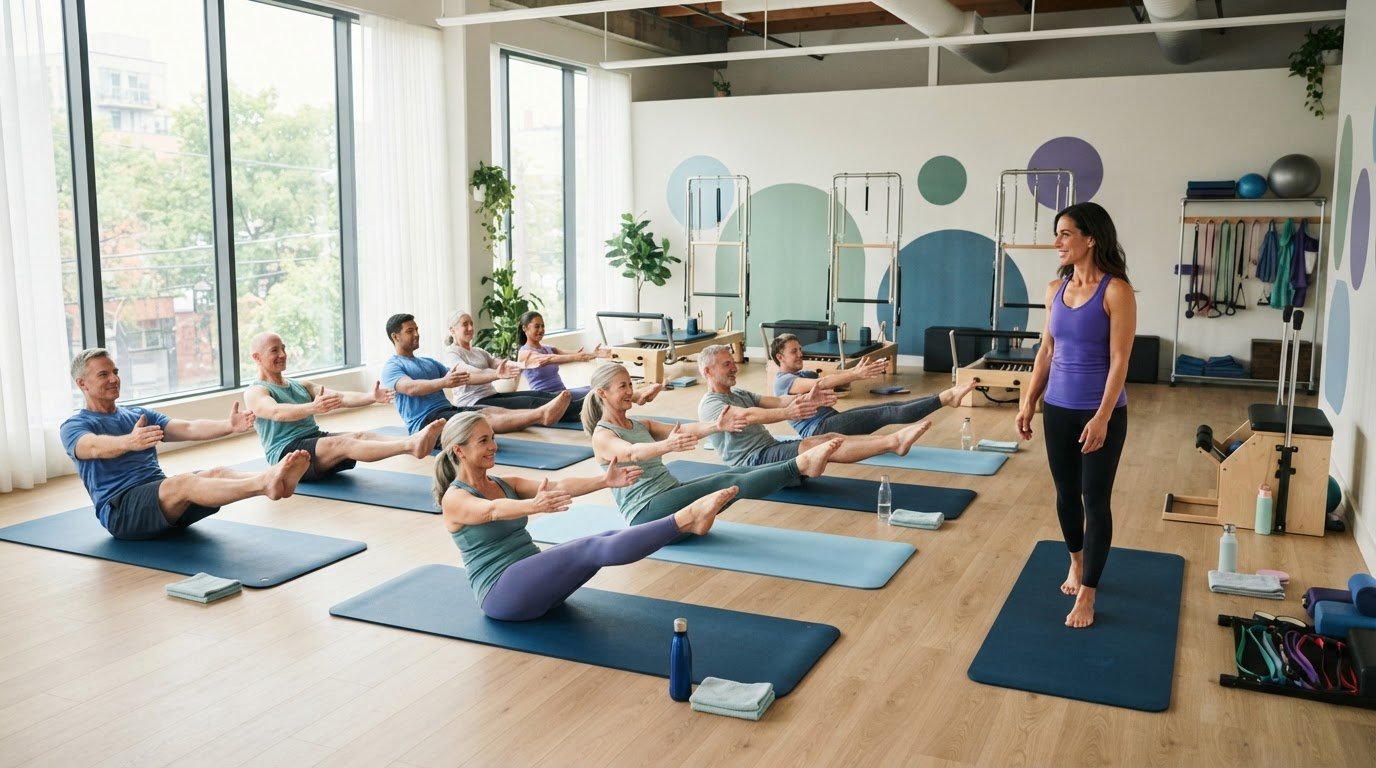
A successful Pilates Workshop feels like more than a longer class. A focused theme gives people a clear reason to register, and a well-planned format keeps them engaged from arrival to follow-up. But choosing a topic is only the start. Promotion, bookings, payments, and staff coordination can quickly add to your workload.
To make the event work for attendees and your team, plan both the teaching experience and the details behind it. Start with a clear audience and purpose, then set the format, capacity, registration process, and event-day roles.
This guide walks you through each step, from choosing a workshop theme to preparing the room and following up afterward. Studio management software can help organize scheduling, bookings, payments, and staff management alongside your regular studio operations, so you spend less time tracking details manually.
• Choose a focused workshop theme that gives your audience a clear reason to register.
• Shape the agenda around the promised experience, available equipment, instructor capacity, and group size.
• Set capacity and registration details before promotion so attendees know what to expect and how to book.
• Use a run sheet to prepare the room, welcome participants, and keep the Pilates Workshop on schedule.
• Use studio software to coordinate scheduling, bookings, payments, and staff responsibilities with less manual admin.
Planning a special event involves more than adding a class to the schedule. You need to give attendees a clear reason to spend time on it and show how it differs from their regular practice. A Pilates workshop is a focused, time-bound session built around one clear learning or practice theme. Unlike a recurring class, it gives participants time to explore that theme in more depth. Unlike a private session, it brings a group together around a shared focus.
A clear focus helps make the event worthwhile. A regular class may offer a broad practice that changes from week to week. A workshop might explore mat technique, introduce movement variations, or examine how breath and control support a sequence. The Pilates Wikipedia article offers background on Pilates principles and styles that can help you shape a topic grounded in the practice. Describe what attendees will explore, without promising a particular result.
Start with one purpose, not a collection of loosely related ideas. A technique workshop, for example, could focus on alignment and movement cues. A movement exploration session could give participants time to experience variations within a sequence. Choose a topic that connects with your audience’s interests, then describe what they’ll do or learn in plain language.
Keep the promise simple and experience-based: “Explore ways to adapt a mat sequence” or “Practise foundational movement cues.” These descriptions set expectations without guaranteeing progress or making health claims. They also help you plan: each activity should support the stated purpose.
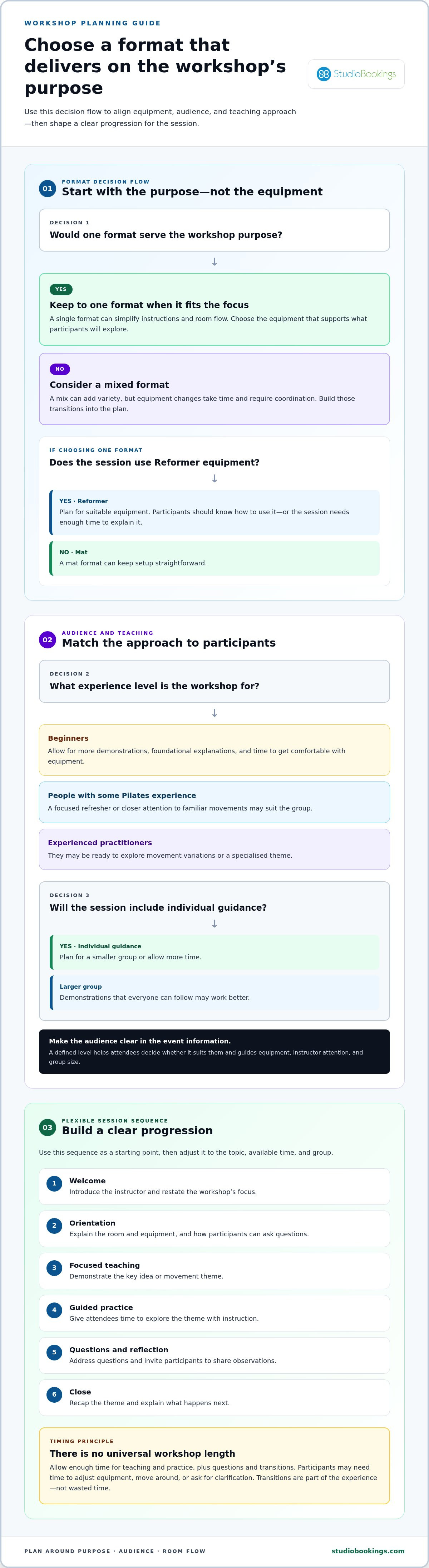
Your audience shapes the teaching approach. Beginners may need more demonstrations, explanations of foundational concepts, and time to get comfortable with equipment. Returning participants may value a focused refresher or the chance to practise familiar movements with more attention to detail. Experienced participants may be ready to explore variations or a specialised theme.
Trying to serve every level at once can make instructions and pacing less clear. Decide whether the session is beginner-friendly, intended for people with some Pilates experience, or designed for experienced practitioners. State that in the event information. It helps attendees decide whether the workshop suits them and guides your choices about equipment, instructor attention, and group size.
A clear purpose and audience make a one-off session distinct from a longer class. They also give you a foundation for setting the format and registration details.
A strong format turns your workshop purpose into a well-paced experience. Start with what participants will explore, then decide what they need to hear, practise, and discuss. A technique-focused session may need demonstrations and time to repeat movements. A movement exploration workshop may benefit from more guided practice and reflection. Build around the purpose rather than packing the schedule.
There’s no universal workshop length. Allow enough time for teaching and practice, plus questions and transitions. Equipment, instructor capacity, and group size matter too. A format with individual guidance may need a smaller group or more time, while a larger group may benefit from demonstrations everyone can follow together.
Choose equipment that supports the session’s purpose. A mat format can keep setup straightforward. Reformer practice requires suitable equipment and participants who know how to use it, or enough time to explain it. A mixed format can add variety, but equipment changes take time and require coordination. If one format serves the workshop purpose, sticking to it can simplify instructions and room flow.
Tell participants what equipment the workshop uses and whether they need prior familiarity before they register. That helps them arrive prepared and lets you plan the space and teaching approach around the group.
Use this flexible sequence as a starting point, then adjust it to your topic, available time, and group:
Introduce the instructor and restate the workshop’s focus.
Explain the room and equipment, and how participants can ask questions.
Demonstrate the key idea or movement theme.
Give attendees time to explore the theme with instruction.
Address questions and invite participants to share observations.
Recap the theme and explain what happens next.
Leave time between activities. Participants may need to adjust equipment, move around the room, or ask for clarification. Transitions are part of the experience, not wasted time. Avoid adding activities just to fill the agenda. Each part should support the workshop purpose.
Once the format is set, you can coordinate the practical details. Explore Pilates studio software to see how scheduling, bookings, payments, and staff management can support workshop planning alongside regular studio operations.
Once you’ve settled on the format, make it easy for people to decide whether the workshop suits them and reserve a place. Set the essential details before promoting the event. That way, your message is clear and the booking process is ready when people are interested.
Consider usable room space, available equipment, the workshop format, and how much individual instructor attention participants may need. A session with equipment changes or individual guidance may call for a smaller group than one built around demonstrations for everyone.
Confirm the date, duration, intended experience level, format, and equipment requirements. Include relevant accessibility information, such as room access or movement considerations attendees should know about, so people can make an informed decision.
Decide when bookings close and explain cancellation or transfer terms in plain language. Make these details easy to find before someone registers.
Choose where participants will register and how you’ll record bookings and payments. Test the process so the event information, available spaces, and confirmation details are consistent.
After registration, share the date, arrival information, what to bring, equipment notes, and how to get in touch with the studio. This helps participants arrive prepared.
Lead with the information people need to decide: who the event is for, what they’ll explore, the format, the date, and how to register. For example: “Returning Pilates participants: explore variations in a guided mat workshop on [date]. Reserve your place through [booking page].” Keep the description aligned with the agenda, and don’t imply that attendees will achieve a guaranteed result.
Share the event through channels your audience already uses. You might email existing members, post on studio social channels, add it to your booking page, and mention it at the studio. Keep the registration details consistent across each channel. In-studio reminders can reach members who attend classes, while email and social posts make the event easier to share.
Track registrations against your attendance limit and communicate promptly if event details change. Attendance and financial results depend on your studio, audience, and event. Clear planning helps you make informed decisions without promising a particular turnout.
A well-planned session still needs a clear run sheet. Assigning each task helps prevent small logistics from interrupting instruction and makes it easier to welcome attendees. Name a workshop check-in lead to greet participants, confirm arrivals, and answer practical questions while the instructor prepares to teach.
Work through a simple checklist before doors open:
Arrange mats or equipment to suit the activities, leaving enough space for people to move between stations.
Confirm that the items needed for the session are ready and positioned. Have a backup plan, such as adjusting an activity if a piece of equipment can’t be used.
Keep registration details easy to access so the check-in lead can welcome participants without delaying the start.
Decide who handles arrivals, latecomers, equipment questions, and room changes. If you’re hosting alone, build these tasks into your run sheet and keep the process simple.
Allow time for arrival and check-in before teaching begins. Participants can settle in, find their place, and ask practical questions without cutting into the workshop. If someone arrives late, the check-in lead can guide them into the room at a suitable pause. If equipment can’t be used, have an alternative movement or setup ready that still supports the session’s purpose.
Welcome the group and explain what will happen, where equipment is, and how participants can ask questions or take a break. A short orientation removes guesswork. Move through the agenda with clear verbal cues, especially before changing activities or rearranging the room. Clear transitions help participants stay engaged and keep the session on track.
Offer options that fit the audience and workshop focus. For a beginner-friendly session, demonstrate movements and explain the setup before practice. For a more experienced group, clarify variations and how to choose an appropriate option. Encourage participants to work within their comfort and experience, without presenting any movement as a guaranteed outcome.
At the close, recap the central theme and invite final questions. Share relevant next steps, such as where participants can find information about upcoming studio sessions. For a broader view of the systems behind day-to-day studio operations, read the Pilates studio management software guide.
A smooth Pilates Workshop depends on clear roles as much as good teaching. Explore studio management software to see how scheduling, bookings, payments, and staff coordination can support your events.
A workshop is part of your studio’s operations. It needs a place in the schedule, a booking process, payment tracking, staff coordination, and communication before and after the event. Managing those pieces across separate notes and tools can create extra admin. Studio software can bring scheduling, bookings, payments, and staff management together in one dashboard, leaving you more time to focus on teaching and the attendee experience.
Software supports the operations, but it doesn’t replace thoughtful workshop design or instructor expertise. You still choose the theme, shape the session, and guide participants. The right tools can help organize the details around that work.
Add the workshop to your scheduling and booking process so it’s visible and registrations are easier to track. Centralized booking records help you see who has reserved a place without piecing together separate lists. Managing payments alongside class and membership administration can also keep workshop transactions connected to the studio’s broader records.
Staff management tools can help you coordinate who is teaching and who is handling event tasks. Keep confirmation and arrival information consistent, whether you share it through your booking process or another studio communication channel. The setup will depend on how you run the event, but the goal is the same: reduce repeated manual work and make responsibilities clear.
For a deeper look at the tools studios use to manage their operations, explore this Pilates studio software guide.
After the session, send a thank-you and a brief feedback request. Keep the questions easy to answer. You might ask what attendees found useful and what topics they’d like to explore in a future event. Their responses can help you improve the experience and make informed decisions about what to host next.
Follow-up can also connect the workshop to your regular schedule. If a participant enjoyed a particular style of practice, point them toward a relevant class or membership option. Make it a helpful invitation, not an assumption that everyone will book again. Some attendees may be ready to continue; others may simply appreciate a thoughtful message after the event.
With scheduling, member bookings, payments, and staff management in one studio workflow, you can spend less time chasing details and more time creating valuable experiences. Explore StudioBookings to see how studio software can support your Pilates Workshop and day-to-day operations.
A successful Pilates Workshop starts with a clear purpose and audience, then carries that promise through the format, registration, and event-day experience. Keep the agenda focused, set capacity around your space and teaching style, and make booking details easy to understand. Thoughtful follow-up can help attendees stay connected with your studio.
The admin behind an event doesn’t need to pull your attention away from teaching. StudioBookings brings scheduling, bookings, payments, and staff management into your studio operations. It offers a free trial and no-contract pricing.
Explore StudioBookings and simplify your studio operations. With a practical plan and the right support, you can create a workshop that feels valuable for participants and manageable for your team.
Choose a duration that leaves enough time to introduce the focus, practise, answer questions, and transition between activities. The right length depends on the topic, participant experience, equipment, and format. Share the planned duration before registration so attendees can plan their day. Build in a short buffer rather than filling every minute. That gives the instructor room to respond to the group and close without rushing.
A well-structured workshop usually includes a welcome, an explanation of the session focus, guided instruction, time to practise, and an opportunity to ask questions. Adjust the balance to suit the topic and audience. Tell participants what equipment they’ll use and what experience level is expected. End with a concise recap of what the group explored, plus a relevant suggestion for where attendees can continue their practice.
Start with a specific need or interest among your studio community, then build one clear learning or practice purpose around it. Consider participants’ experience, available equipment, and the instructor’s strengths. A focused topic is easier to explain than a broad promise. Before promoting your Pilates Workshop, check that its title and description make clear who it’s for and what the session will cover.
Set capacity based on the room, equipment, workshop format, and amount of individual guidance participants need. A session with more instructor feedback may suit a smaller group; another format may allow more attendees. Don’t base the limit on room size alone. Leave enough space for movement and transitions, then state the attendance limit in the registration details. Make sure your team can also manage check-in smoothly.
Make the event easy to understand at a glance. Explain who it’s for, what participants will do, the format, date, duration, and how to register. Share consistent information through channels your studio already uses, such as email, social media, booking pages, and in-studio notices. A clear invitation helps potential attendees decide whether the topic suits their interests and whether the event fits their schedule.
Yes, a workshop can suit beginners if you design and describe it with their experience in mind. Use accessible instructions, explain what to expect, and choose a pace that gives participants room to learn. State any experience or equipment requirements before registration. If the session is intended for returning or experienced practitioners instead, say so clearly. Matching the audience to the format helps set appropriate expectations.
Use your studio’s booking and payment workflow to manage registrations alongside regular classes and memberships. Studio management software can centralize scheduling, member bookings, payments, and staff administration, reducing the need to track details across separate records. First, make sure attendees can find the information they need before registering. Then send clear confirmations and event details so your team can focus more time on workshop preparation.